<?xml version="1.0" encoding="UTF-8"?>
<?xml-stylesheet type="text/xsl" href="/stylesheets/feed.atom.xml" media="screen"?>
<feed xml:lang="en-US" xmlns="http://www.w3.org/2005/Atom">
  <id>tag:maginnlab.nd.edu,2005:/news-and-events/news</id>
  <link rel="alternate" type="text/html" href="https://maginnlab.nd.edu"/>
  <link rel="self" type="application/atom+xml" href="https://maginnlab.nd.edu/news-and-events/news.atom"/>
  <id>tag:maginnlab.nd.edu,2005:/latest</id>
  <title>Maginn Lab | News</title>
  <updated>2026-02-11T08:43:00-05:00</updated>
  <link rel="alternate" type="text/html" href="https://maginnlab.nd.edu/"/>
  <link rel="self" type="application/atom+xml" href="https://maginnlab.nd.edu//news-and-events/news.atom"/>
  <subtitle>Discover how the Maginn Lab uses molecular simulations and AI to link material structure to thermophysical properties, advancing sustainable energy solutions.</subtitle>
  <entry>
    <id>tag:maginnlab.nd.edu,2005:News/179095</id>
    <published>2026-02-11T08:43:00-05:00</published>
    <updated>2026-02-11T08:43:56-05:00</updated>
    <link rel="alternate" type="text/html" href="https://maginnlab.nd.edu/news-and-events/news/notre-dames-edward-maginn-elected-to-the-national-academy-of-engineering/"/>
    <title>Notre Dame’s Edward Maginn elected to the National Academy of Engineering</title>
    <summary type="text">
      <![CDATA[Edward Maginn, the Keough-Hesburgh Professor of Engineering in the Department of Chemical and Biomolecular Engineering at the University of Notre Dame, has been elected a member of the National Academy of Engineering.]]>
    </summary>
    <content type="html">
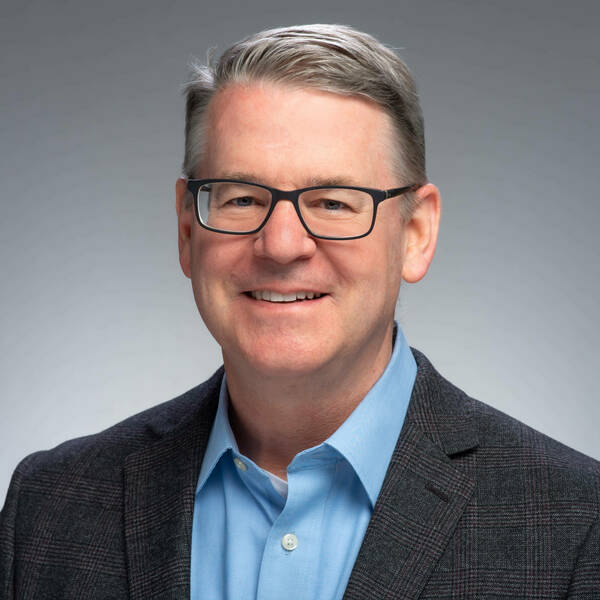
      <![CDATA[<p><a href="https://engineering.nd.edu/faculty/edward-maginn/">Edward Maginn</a>, the Keough-Hesburgh Professor of Engineering in the <a href="https://cbe.nd.edu">Department of Chemical and Biomolecular Engineering</a> at the University of Notre Dame, has been elected a member of the <a href="http://www.nae.edu/">National Academy of Engineering</a> (NAE).</p>
<p>Election to the NAE is among the highest professional distinctions accorded to an engineer. Members are selected by their peers for pioneering advancements in their fields and for leadership in major engineering endeavors, including the development and implementation of innovative approaches to engineering education.</p>
<p>“I am honored and humbled to have been elected to such a distinguished group of scholars,” said <a href="https://maginnlab.nd.edu/">Maginn</a>, who also serves as an associate vice president of research. “I am grateful to my colleagues and students here at Notre Dame who I have had the privilege to work with in the development and application of molecular simulation methods to help tackle some of the most challenging problems in energy and sustainability facing society.”</p>
<p>Maginn is a globally recognized leader in research linking the physical properties of materials to their chemical composition. The NAE is recognizing him “for development and application of molecular modeling and simulation of complex systems involving slow dynamics and long-ranged interactions.”</p>
<p>Maginn’s research has had a major impact on chemical engineering by enabling engineers to design and optimize materials and processes at the molecular level for energy and environmental applications. By developing widely used computational tools and design methods, his research allows engineers to predict material performance before materials are synthesized, reducing development time, cost and risk. These advances have helped move molecular simulation from a specialized research tool into a practical engineering approach used in academia, industry and national laboratories worldwide.</p>
<p>A pioneer in the use of molecular simulations to investigate ionic liquids, Maginn developed new algorithms and open-source simulation tools that made predictive modeling of charged fluids both accurate and broadly accessible. He holds nine patents in this field, and his work led to the development of the open-source Monte Carlo package Cassandra, most commonly used to compute the thermodynamic properties of fluids.</p>
<p>“Ed Maginn’s foundational research in molecular simulation has helped shape modern chemical engineering,” said <a href="https://engineering.nd.edu/faculty/patricia-culligan/">Patricia J. Culligan</a>, the Matthew H. McCloskey Dean of the College of Engineering. “His election to the National Academy of Engineering is a fitting recognition of his scientific leadership, innovation and lasting impact on the field.”</p>
<p>Maginn’s work has directly informed the development of new materials for carbon capture, energy storage, separations and sustainable refrigeration. He is <a href="https://engineering.nd.edu/news/notre-dame-to-develop-next-generation-refrigerant-technology-as-part-of-a-new-national-science-foundation-engineering-research-center/">an active contributor</a> to the <a href="https://erc-earth.ku.edu/">Environmentally Applied Refrigerant Technology Hub</a>, a National Science Foundation-funded Engineering Research Center, alongside 11 other Notre Dame faculty members. He also participates in two Energy Frontier Research Centers supported by the Department of Energy: <a href="https://engineering.case.edu/research/centers/breakthrough-electrolytes-for-energy-storage">Breakthrough Electrolytes for Energy Storage</a> and <a href="https://www.bnl.gov/moltensalts/">Molten Salts in Extreme Environments</a>.</p>
<p>Maginn has published more than 270 peer-reviewed papers with more than 34,000 citations. He has written 10 book chapters. Maginn has been a senior editor of the <a href="https://pubs.acs.org/loi/jpchax">Journal of Physical Chemistry</a> and served on the editorial boards for leading publications in his field, including the <a href="https://www.sciencedirect.com/journal/journal-of-ionic-liquids">Journal of Ionic Liquids</a>, <a href="https://www.sciencedirect.com/journal/fluid-phase-equilibria">Fluid Phase Equilibria</a> and the <a href="https://pubs.acs.org/journal/jceaax">Journal of Chemical and Engineering Data</a>.</p>
<p>“I extend my heartfelt congratulations to Ed on the remarkable achievement of election to the NAE,” said <a href="https://research.nd.edu/people/jeffrey-rhoads/">Jeffrey F. Rhoads</a>, the John and Catherine Martin Family Vice President for Research and professor in the <a href="https://ame.nd.edu/">Department of Aerospace and Mechanical Engineering</a>. “He is both a top researcher and highly respected administrator and educator — such an outstanding recognition for his tremendous research impact and national leadership is well-deserved.”</p>
<p>Since joining the Notre Dame faculty in 1995, Maginn has served as chair of the <a href="https://cbe.nd.edu/">Department of Chemical and Biomolecular Engineering</a>, as well as associate dean for academic programs in the <a href="https://graduateschool.nd.edu/">Graduate School</a>. Maginn is also recognized for his excellence in teaching, having received Notre Dame’s highest honors for faculty instruction: the James A. Burns, C.S.C., Award for Distinction in Graduate Education in 2018 and the Rev. Edmund P. Joyce, C.S.C., Award for Excellence in Undergraduate Teaching in 2022. In addition, Maginn has mentored more than 35 doctoral students and over 20 postdoctoral scholars. He is a trustee and executive director of the nonprofit <a href="http://www.cache.org/computer-aids-chemical-engineering">CACHE Corporation</a>, which promotes the use of computational methods in chemical engineering.</p>
<p>Maginn was <a href="https://engineering.nd.edu/news/notre-dames-edward-maginn-named-fellow-of-the-national-academy-of-inventors/">inducted into the National Academy of Inventors</a> in 2023. He was recently honored with the Ernest Thiele Award from the American Institute of Chemical Engineers in 2021 and the Iowa State University College of Engineering Professional Achievement Citation in Engineering (PACE) award in 2020. Maginn is a fellow of the American Institute of Chemical Engineers, the American Chemical Society and the American Association for the Advancement of Science.</p>
<p>Maginn graduated from Iowa State University with a bachelor’s degree in chemical engineering, followed by a doctorate in chemical engineering from the University of California, Berkeley.</p>
<p>With his election to the NAE, Maginn joins a distinguished group of Notre Dame colleagues who have also received this honor, including <a href="https://engineering.nd.edu/faculty/ahsan-kareem/">Ahsan Kareem</a>, the Robert M. Moran Professor of Engineering; <a href="https://cbe.nd.edu/faculty/thomas-degnan/">Thomas Degnan</a>, professor emeritus of chemical and biomolecular engineering; <a href="https://ame.nd.edu/faculty/frank-incropera/">Frank Incropera</a>, the Clifford and Evelyn Brosey Professor Emeritus of Aerospace and Mechanical Engineering; Steve Walker, professor of the practice; and <a href="https://engineering.nd.edu/faculty/charles-wampler/">Charles Wampler</a>, the Huisking Foundation, Inc. Collegiate Research Professor.</p>
<p><em><strong>Contact: </strong>Brandi Wampler, associate director of media relations, 574-631-2632, <a href="mailto:brandiwampler@nd.edu">brandiwampler@nd.edu</a></em></p>
<p class="attribution">Originally published by <span class="rel-author">Erin Fennessy</span> at <span class="rel-source"><a href="https://news.nd.edu/news/notre-dames-edward-maginn-elected-to-the-national-academy-of-engineering/">news.nd.edu</a></span> on <span class="rel-pubdate">February 10, 2026</span>.</p>]]>
    </content>
    <link rel="enclosure" type="image/jpeg" href="https://maginnlab.nd.edu/assets/648269/edward_maginn_featurejpg.jpg" title="A smiling man with gray hair, a white beard, and glasses wears a blue shirt and a dark plaid jacket against a gray background."/>
    <author>
      <name>Erin Fennessy Lawlor</name>
    </author>
  </entry>
  <entry>
    <id>tag:maginnlab.nd.edu,2005:News/179003</id>
    <published>2025-11-25T13:14:00-05:00</published>
    <updated>2026-02-05T13:14:18-05:00</updated>
    <link rel="alternate" type="text/html" href="https://maginnlab.nd.edu/news-and-events/news/notre-dame-global-laid-the-groundwork-for-more-research-collaborations-to-come-through-global-partners-conference/"/>
    <title>Notre Dame Global laid the groundwork for research collaborations at the Global Partners Conference</title>
    <summary type="text">
      <![CDATA[Research is the vehicle that moves knowledge forward. At the University of Notre Dame, faculty members and student scholars not only conduct extensive research, but are also the connectors who extend the reach of that research beyond the borders of the University’s campus in South Bend. One…]]>
    </summary>
    <content type="html">
      <![CDATA[<p>Research is the vehicle that moves knowledge forward. At the University of Notre Dame, faculty members and student scholars not only conduct extensive research, but are also the connectors who extend the reach of that research beyond the borders of the University’s campus in South Bend.</p>
<p>One of the roles of Notre Dame’s Global Innovation team is to do just that: expand the breadth of Notre Dame’s research through facilitating more international collaboration. And nowhere were the fruits of the Global Innovation team’s efforts more evident than at the <a href="https://global.nd.edu/about/events/global-partners-conference/">Global Partners Conference</a>, held at Notre Dame this fall.</p>
<p>“This inaugural conference built a new Notre Dame platform for convening university representatives from across the globe to share expertise in advancing global research through partnerships,” said Jonathan Noble, Notre Dame Global’s sr. assistant provost for internationalization and global executive director.</p>
<p>Notre Dame Global’s Innovation Team supports the University’s ambition to strengthen international research collaboration and scholarly exchange. Since 2017, Notre Dame Global has awarded 264 grants to Notre Dame faculty in support of their international research and joint research programs are continuing to grow.</p>
<p>As part of the week-long conference, the “connectors”—academic leaders, administrators, and faculty— participated in five panels focused on initiating and deepening global research through collaborative partnerships. Participants were invited to attend informative sessions led by experts in building partnerships with a research focus. They presented on themes such as funding global research, increasing faculty engagement, building institutional capacity for research, and deepening research efforts at Notre Dame’s global locations. The range of topics conveyed an understanding that while each institution has its own distinct goals and challenges in regards to research, they share a common desire to invest in and advance research with a global impact.</p>
<p>The Keough School of Global Affairs also presented a panel titled “Global Collaborations in Education, Research, and Policy Impact” that highlighted the School’s expertise in conducting cutting-edge research around the world to address today's most pressing global challenges in <a href="https://keough.nd.edu/research-and-policy/faculty-research/">democracy and human rights, peacebuilding, poverty, inequality, and marginalization, and sustainability and environmental justice</a>.</p>
<p>Together with representatives from the research offices of the Ukrainian Catholic University and Durham University, Notre Dame presented its ongoing global research partnerships to conference participants. Programs highlighted included the <a href="https://global.nd.edu/faculty-research/grants-and-funding/university-of-notre-dame-ukrainian-catholic-university-faculty-collaboration-grant-program/">Notre Dame–Ukrainian Catholic University Faculty Collaboration Grant Program</a> and collaboration grant programs with Durham University, such as the <a href="https://global.nd.edu/faculty-research/grants-and-funding/durham-university-travel-grant-program/">Durham University Travel Grant Program</a>.</p>
<p>Conference participants from institutions with which the University has initiated new research collaboration grant programs also attended, including São Paulo State University (UNESP), through the <a href="https://global.nd.edu/faculty-research/grants-and-funding/notre-dame-sao-paulo-state-university-seed-grant-program/">Notre Dame-São Paulo State University Seed Grant Program</a> and <a href="https://global.nd.edu/faculty-research/grants-and-funding/university-of-notre-dame-sao-paulo-state-university-travel-grant/">Notre Dame-São Paulo State University Travel Grant</a>. New institutional commitments were also made with Tata Institute of Social Sciences (TISS), the Indian Institutes of Science Education and Research (IISER), and Universidad Iberoamericana (IBERO) to support faculty mobility and exchanges. Partnerships with notable institutions such as these offer a glimpse of the healthy ground the Global Innovation team has been cultivating to improve and increase collaboration across the globe.</p>
<p><a href="https://engineering.nd.edu/faculty/edward-maginn/">Ed Maginn</a>, Keough-Hesburgh Professor of Engineering and <a href="https://research.nd.edu/">associate vice president for research</a> at Notre Dame, who presented at the conference, noted, “Moments of convening like this conference show how engagement in research is critical for furthering the global Catholic mission of the University.” Maginn added, “By strengthening ties among global partners, we encourage research innovation and magnify its impact across the globe.”</p>
<p>The week concluded by looking to the future. In an open discussion moderated by Michael Pippenger, Notre Dame’s vice president and associate provost for internationalization, conference attendees were asked to explore what the future of global education and global research looks like for them. They were also encouraged to work with the global directors in Notre Dame’s 12 global locations to continue forging and developing partnerships. Ultimately, the <a href="https://www.linkedin.com/posts/notre-dame-global_global-partners-conference-at-the-university-activity-7378839816311857152-D_UT/?utm_source=share&amp;utm_medium=member_desktop&amp;rcm=ACoAABr5RdoBdxZrgW1JnzFiodDV_YuT2UsKMdE">conference accomplished</a> what it set out to do: pave the way for more conversations, more collaborations, and more convening to come.</p>
<p class="attribution">Originally published by <span class="rel-author">Jessie Carson</span> at <span class="rel-source"><a href="https://global.nd.edu/news-stories/news/notre-dame-global-laid-the-groundwork-for-more-research-collaborations-to-come-through-global-partners-conference/">global.nd.edu</a></span> on <span class="rel-pubdate">November 25, 2025</span>.</p>]]>
    </content>
    <link rel="enclosure" type="image/jpeg" href="https://maginnlab.nd.edu/assets/647690/mc_92225_global_partners_conference_31.jpeg" title="People walk along a paved path on a sunny day, with the Golden Dome of the Main Building and other Notre Dame campus buildings in the background. Some people wear lanyards, others talk or look at their phones, surrounded by green trees."/>
    <author>
      <name>Jessie Carson</name>
    </author>
  </entry>
  <entry>
    <id>tag:maginnlab.nd.edu,2005:News/179004</id>
    <published>2025-11-24T13:14:00-05:00</published>
    <updated>2026-02-05T13:15:12-05:00</updated>
    <link rel="alternate" type="text/html" href="https://maginnlab.nd.edu/news-and-events/news/earth-a-new-way-to-view-the-blue-sky/"/>
    <title>EARTH: A New Way to View the Blue Sky</title>
    <summary type="text">
      <![CDATA[Academics and HVACR professionals say innovation is equal parts imagination and science. When Irish physicist John Tyndall was conducting research on why the sky is blue, he explored the notion with awe, for the pure sake of the idea. As he performed his experiments at The Royal Institution…]]>
    </summary>
    <content type="html">
      <![CDATA[<p>Academics and HVACR professionals say innovation is equal parts imagination and science.</p>
<p>When Irish physicist John Tyndall was conducting research on why the sky is blue, he explored the notion with awe, for the pure sake of the idea. As he performed his experiments at The Royal Institution in London, in 1869, he likely did not foresee that his work would inspire generations of scientists and entrepreneurs who would adopt the term “blue sky” to explain the tenets of basic research.</p>
<p>Tyndall certainly did not consider his discovery in the context of modern air conditioning, which would not be invented until 1902.</p>
<p>Nevertheless, his way of thinking is still powering the ubiquitous technology we use today.</p>
<p>“Blue sky research is unconstrained scientific exploration, the what if, the telescope of what might be possible,” said Tony von Sadovszky, the Innovation Officer at EARTH, an engineering research center funded by the National Science Foundation and U.S. corporate support. “These ideas are early stage, unbounded invention without guardrails, telling us where the science is leading, serving as the groundwork for later commercial opportunities.”</p>
<p>Von Sadovszky was sharing his views at a recent industry forum hosted by EARTH – the Environmentally Applied Refrigerant Technology Hub.</p>
<figure class="image image-right"><img src="https://research.nd.edu/assets/639575/200x/01kakhc1megxt9sdav984k3mg9.jpg" alt="A smiling man with short, styled white hair wears a blue striped collared shirt and a tan blazer." width="200" height="280">
<figcaption>Translating science into scaleable innovations is EARTH's mission as a nationwide engineering research center, says EARTH Innovation Officer Tony von Sadovszky. Photo: University of Kansas</figcaption>
</figure>
<p>The forum gathered more than 130 people, including faculty and students from six universities, community college professors, and professionals from numerous companies working in the heating, ventilation, air conditioning and refrigeration (HVACR) sector. From numerous perspectives came a unified mission: to conduct cutting-edge research that helps industry to innovate, leading to new products and services and meaningful careers.</p>
<p>During a fireside chat with EARTH Industry Liaison Officer Casey Williams, von Sadovszky formed a bridge between the complex academic research underway and business concepts such as blue sky technologies, blue ocean strategies and deep tech. Both are based at the University of Kansas, EARTH’s lead university and forum host.</p>
<p>“Blue Ocean is about markets; capturing the value in blue sky technologies to create new uncontested market spaces, versus a red ocean with blood in the water from folks squeaking out three percent market share,” said von Sadovszky, echoing the book <a href="https://www.blueoceanstrategy.com/books/blue-ocean-strategy-book/">Blue Ocean Strategy</a> by Chan Kim and Renée Mauborgne.</p>
<p>For example, the current refrigerant market could be seen as a red ocean. But finding ways to recycle used refrigerant – the kind one would find in a dusty AC window unit – could lead to new sources of chemical compounds that companies can use to manufacture new solar panels and electric car batteries: blue ocean.</p>
<p>“Engineering the practical; translating the science into defensible, scalable innovations would be described as deep tech, which is the core NSF ERC vision,” von Sadovszky said.</p>
<p>Ed Maginn, Keough-Hesburgh Professor of Engineering and Associate Vice President for Research at the University of Notre Dame, likened the use of known molecules to a red ocean in his presentation at the forum.</p>
<p>“In the known chemical space…there are millions of molecules,” Maginn said. “Still, none of them are new; someone has figured them out.”</p>
<p><iframe width="560" height="315" src="https://www.youtube.com/embed/q3Q8borfdWA?si=-nuGumcMK2Tg6xFO" title="YouTube video player" frameborder="0" allow="accelerometer; autoplay; clipboard-write; encrypted-media; gyroscope; picture-in-picture; web-share" referrerpolicy="strict-origin-when-cross-origin" allowfullscreen="allowfullscreen"></iframe></p>
<p>Researchers today are beginning to search outside the boundaries of contested space, akin to swimming in a pink ocean, Maginn said. “I’d say this is where cutting-edge technology in our industry is. How we make advances is slow and it’s expensive and it takes a lot of time. It requires a lot of people.”</p>
<p>Enter machine learning and AI.</p>
<p>It’s the only way to accelerate research, to find the new molecules that can lead to advanced materials that the HVACR sector needs to innovate, said Maginn, co-author of a <a href="https://pubs.rsc.org/en/content/articlelanding/2025/dd/d5dd00087d">peer-reviewed article</a> on the use of machine learning in molecular discovery.</p>
<p>Still, artificial intelligence is a function of human intelligence.</p>
<p>“Graduate students come in ready to absorb knowledge…but it takes time for them to learn these new tools; it’s not something you can do in a week,” Maginn said. “That’s part of the timescales mismatch between academia and industry.”</p>
<p>Maginn told the industry forum crowd that he had worked in industry before graduate school.</p>
<p>“I remember thinking there are three timescales in industry: over coffee, over lunch and over night.”</p>
<p>The private sector’s need for speed actually reinforces EARTH’s value, he said.</p>
<p>“This consortium can help blend in different technologies at different stages of the development cycle. Industry can build on academic research at various stages” and get to market faster, he said.</p>
<p>Chuck Allgood, technology fellow at Chemours and chair of EARTH’s Industrial Advisory Board, also believes that government, academia and business should partner to solve complex problems.</p>
<p>As he held up the forum brochure, he pointed to the companies supporting EARTH: “You can see the logos of the companies there, really leaders in the global HVACR industry for years. [Even if] you’re a chemical refrigerant manufacturer like my company, a refrigerant on its own isn’t going to do anything for anybody. It needs to go into a system, and those systems are represented by the companies here.”</p>
<p>His remarks provided context for the blue sky conversations that would take place later in the day.</p>
<p>“If we look at the long acronym, NSF ERC EARTH, the basis is science,” Allgood said. “Accurate data, reliable data, reproducible, peer-reviewed research is really the foundation on how we built this whole industry.”</p>
<p>Public policies come and go, from energy efficiency standards to trade policy, he said. Amidst those changes, “We want sound, science-based, data-driven decisions for all that.”</p>
<p>He urged professionals from non-member companies to join EARTH, advising they would find a lot of common ground.</p>
<p>“These companies aren’t charities,” he said. “We’re a publicly traded company. Our shareholders have invested in us and we need to be good stewards of that investment. The fact that we have companies investing in EARTH speaks to all the aspects of EARTH, the future, and all the benefits we see.”</p>
<p><a href="https://erc-earth.ku.edu/2025-industry-forum">View the photo gallery</a> from the EARTH Industry Forum.</p>
<p class="attribution">Originally published by <span class="rel-author">Sally O'Dowd</span> at <span class="rel-source"><a href="https://research.nd.edu/news-and-events/news/earth-a-new-way-to-view-the-blue-sky/">research.nd.edu</a></span> on <span class="rel-pubdate">November 24, 2025</span>.</p>]]>
    </content>
    <link rel="enclosure" type="image/jpeg" href="https://maginnlab.nd.edu/assets/647691/heading.jpg" title="A man with glasses and white hair, wearing a dark suit, light blue shirt, and striped tie, speaks at a podium. He holds up a spiral-bound booklet from the &quot;PRISM-ERA Annual Meeting University of Notre Dame&quot; that thanks industry members."/>
    <author>
      <name>Sally O'Dowd</name>
    </author>
  </entry>
  <entry>
    <id>tag:maginnlab.nd.edu,2005:News/178978</id>
    <published>2025-07-23T21:17:00-04:00</published>
    <updated>2026-02-04T21:17:58-05:00</updated>
    <link rel="alternate" type="text/html" href="https://maginnlab.nd.edu/news-and-events/news/notre-dame-hosts-major-international-artificial-intelligence-and-machine-learning-conference/"/>
    <title>Notre Dame hosts major international artificial intelligence and machine learning conference</title>
    <summary type="text">
      <![CDATA[Experts from 22 different institutions of education and research located in 7 different countries gathered at the University of Notre Dame (South Bend, Indiana, USA) last week for a flagship workshop of the Centre Européen de Calcul Atomique et Moléculaire (CECAM).…]]>
    </summary>
    <content type="html">
      <![CDATA[<p>Experts from 22 different institutions of education and research located in 7 different countries gathered at the University of Notre Dame (South Bend, Indiana, USA) last week for a flagship workshop of the <a href="https://www.cecam.org/">Centre Européen de Calcul Atomique et Moléculaire</a> (CECAM). From July 7 to 9, 2025, the participants—who are among the world's top researchers in the development and application of artificial intelligence (AI) and machine learning for chemistry and materials discovery—gathered for presentations, a poster session, and discussions focused on machine learning advances for the prediction of molecular and material properties.</p>
<p>“This was a unique opportunity to bring together so many experts in the field from all over the world right here at Notre Dame,” said <a href="https://cbe.nd.edu/faculty/yamil-j-colon/">Yamil Colón,</a> associate professor in the <a href="https://cbe.nd.edu/">Department of Chemical and Biomolecular Engineering</a>. “Our students were able to participate in the poster sessions and share ideas with world-class peers. This week was a great moment for all of us to get together, to network, and to share science.”</p>
<p>The workshop marks only the second occasion that CECAM has convened in the United States. Founded in 1969 and headquartered in Lausanne, Switzerland, CECAM’s US-Central node was established at the University of Chicago in 2023, <a href="https://research.nd.edu/news-and-events/news/notre-dame-helps-establish-the-first-us-node-of-top-computational-modeling-network/">with Notre Dame as one of its founding partners</a>. With 21 nodes encompassing 29 institutions from 17 countries, CECAM meets regularly to share findings and best practices in computational science organized around a timely theme.</p>
<p>“Machine learning, the focus of this workshop, is revolutionizing the field of computational predictions of molecular and material properties. It has enabled recent advances like foundation models and machine learning interatomic potentials,” said Colón, who served as one of the workshop’s organizers.</p>
<p>In recent years, machine learning has become a powerful tool for predicting the properties of chemical structures and engineered materials without the need for wet lab experiments, which can be time-consuming and hazardous. Advances in computer engineering have allowed researchers to develop algorithms that can extract chemical attributes and predict properties from atomic coordinates and feature vectors. Experts have also devoted much effort to compiling large property datasets, which are critical for the training and standardizing of new frameworks.</p>
<figure class="image image-right"><img src="https://research.nd.edu/assets/623067/head2.jpg" alt="A speaker in a light gray, plaid blazer stands at a podium with two monitors, presenting to an audience in a university lecture hall." width="600" height="400">
<figcaption>Yamil Colón, associate professor in the Department of Chemical and Biomolecular Engineering at the University of Notre Dame, presents his research in a talk at the CECAM flagship workshop at the University of Notre Dame on July 9, 2025.</figcaption>
</figure>
<p>To date, machine learning models have been successfully applied to the prediction of reactive, physicochemical, and pharmacological properties of molecules and materials. Researchers have also implemented machine learning in spectroscopy, which enables the automated characterization of a variety of chemical spectra, including infrared (IR), ultraviolet and visible light (UV/vis), and nuclear magnetic resonance (NMR).</p>
<p>“Machine learning advancements open the door for accelerating chemical and materials characterization in the immediate future,” explained Colón. “With a new understanding of physical, chemical, and molecular phenomena that were once unattainable, there is high potential for the development of novel materials to address issues in energy, water security, and healthcare, as well as a new generation of drug development."</p>
<p>“This workshop facilitated a great exchange of information on the latest developments in this fast-moving research area,” said <a href="https://engineering.nd.edu/faculty/edward-maginn/">Ed Maginn</a>, associate vice president for research and Keough-Hesburgh Professor in the <a href="https://cbe.nd.edu/">Department of Chemical and Biomolecular Engineering</a>, who helped organize the workshop. “I’m very excited that Notre Dame was able to host such an exceptional group of scholars for a rich week of international collaboration in this crucial field.”</p>
<p>The workshop was made possible by financial support from CECAM as well as the following Notre Dame entities: <a href="https://precisionhealth.nd.edu/">Berthiaume Institute for Precision Health</a>; <a href="https://crc.nd.edu/">Center for Research Computing</a>; <a href="http://engineering.nd.edu">College of Engineering</a>; <a href="http://science.nd.edu">College of Science</a>; <a href="https://cbe.nd.edu/">Department of Chemical and Biomolecular Engineering</a>; <a href="https://chemistry.nd.edu/">Department of Chemistry and Biochemistry</a>; <a href="https://latinostudies.nd.edu/">Institute for Latino Studies</a>; <a href="https://lucyinstitute.nd.edu/">Lucy Family Institute for Data &amp; Society</a>; <a href="http://energy.nd.edu">ND Energy</a>; <a href="https://nano.nd.edu/">NDnano</a>; <a href="http://research.nd.edu">Notre Dame Research</a>; <a href="https://sai.nd.edu/">Scientific Artificial Intelligence Initiative</a>.</p>
<p>To learn more about machine learning and artificial intelligence research at the University of Notre Dame, please visit the <a href="https://crc.nd.edu/">Center for Research Computing</a>, <a href="https://lucyinstitute.nd.edu/">Lucy Family Institute for Data &amp; Society</a>, and <a href="https://sai.nd.edu/">Scientific Artificial Intelligence Initiative</a>.</p>
<p><strong>Contact</strong></p>
<p>Erin Fennessy / Writing Program Manager</p>
<p>Notre Dame Research / University of Notre Dame</p>
<p>efenness@nd.edu / +1 574-631-8183</p>
<p>research.nd.edu / @UNDResearch / <a href="http://linkedin.com/company/undresearch">linkedin.com/company/undresearch</a></p>
<p><strong>Photos</strong></p>
<p>Photos by Angelic Rose Hubert.</p>
<p><strong>About Notre Dame Research</strong></p>
<p>The University of Notre Dame is a private research and teaching university inspired by its Catholic mission. Located in South Bend, Indiana, its researchers are advancing human understanding through research, scholarship, education, and creative endeavor in order to be a repository for knowledge and a powerful means for doing good in the world. For more information, please visit <a href="http://research.nd.edu">NDR's website</a> or <a href="https://www.linkedin.com/company/undresearch/">NDR's LinkedIn</a>.<strong id="docs-internal-guid-f99cab69-7fff-7fe1-2eee-4168d3096e59"><br></strong></p>
<p class="attribution">Originally published by <span class="rel-author">Erin Fennessy</span> at <span class="rel-source"><a href="https://research.nd.edu/news-and-events/news/notre-dame-hosts-major-international-artificial-intelligence-and-machine-learning-conference/">research.nd.edu</a></span> on <span class="rel-pubdate">July 22, 2025</span>.</p>]]>
    </content>
    <link rel="enclosure" type="image/jpeg" href="https://maginnlab.nd.edu/assets/647585/lead.jpg" title="A man in a plaid shirt gestures while explaining his research poster to another man at a University of Notre Dame event.  A third person looks on.  The poster includes scientific charts, diagrams, and text."/>
    <author>
      <name>Erin Fennessy Lawlor</name>
    </author>
  </entry>
  <entry>
    <id>tag:maginnlab.nd.edu,2005:News/179001</id>
    <published>2024-08-23T12:30:00-04:00</published>
    <updated>2026-02-05T12:30:10-05:00</updated>
    <link rel="alternate" type="text/html" href="https://maginnlab.nd.edu/news-and-events/news/notre-dame-to-develop-next-generation-refrigerant-technology-as-part-of-a-new-national-science-foundation-engineering-research-center/"/>
    <title>Notre Dame to develop next-generation refrigerant technology as part of a new National Science Foundation Engineering Research Center</title>
    <summary type="text">
      <![CDATA[The University of Notre Dame is part of a new National Science Foundation (NSF) Gen-4 Engineering Research Center (ERC) called EARTH, which stands for Environmental Applied Refrigerant Technology Hub. Led by the University of Kansas, EARTH will bring together 80 institutions and researchers from a wide array of disciplines. In addition to Notre Dame, the University of Maryland, the University of Hawai'i, the University of South Dakota and Lehigh University will serve as core university partners. All partners will collaborate around a shared goal: creating a sustainable refrigerant economy.]]>
    </summary>
    <content type="html">
      <![CDATA[<figure class="image image-right"><img src="https://news.nd.edu/assets/579396/jennifer_schaefer_2_.jpg" alt="Jennifer Schaefer is pictured. She has long brown hair, brown eyes and is wearing a dark green top." width="300" height="300">
<figcaption>Jennifer Schaefer (Photo by Wes Evard/University of Notre Dame)</figcaption>
</figure>
<p>The University of Notre Dame is part of a new National Science Foundation (NSF) <a href="https://new.nsf.gov/funding/opportunities/gen-4-engineering-research-centers-erc">Gen-4 Engineering Research Center</a> (ERC) called EARTH, which stands for Environmental Applied Refrigerant Technology Hub. Led by the University of Kansas, EARTH will bring together 80 institutions and researchers from a wide array of disciplines. In addition to Notre Dame, the University of Maryland, the University of Hawai'i, the University of South Dakota and Lehigh University will serve as core university partners.</p>
<p>All partners will collaborate around a shared goal: creating a sustainable refrigerant economy.</p>
<p>Currently, most of the air-conditioning and refrigeration systems used to preserve foods, store medicines and cool buildings rely on hydrofluorocarbons (HFCs). HFCs are greenhouse gases, some of which are thousands of times more effective at trapping heat than carbon dioxide. Due to leaks and the energy required to operate existing systems, HFCs account for nearly 8 percent of global greenhouse gas emissions.</p>
<p>The U.S. and 170 other countries are phasing down HFCs in accordance with domestic and international agreements signed in recent years, which creates a tremendous challenge to responsibly and sustainably replace billions of kilograms of refrigerants.</p>
<p>“A warming world combined with rising incomes around the world means that globally, we’re adding air conditioners at a rapid rate. Over 3 billion people live in some of the hottest places on Earth, and only 8 percent currently have air conditioning,” said <a href="https://engineering.nd.edu/faculty/jennifer-schaefer/">Jennifer Schaefer</a>, the Sheehan Family Collegiate Professor in the <a href="https://cbe.nd.edu">Department of Chemical and Biomolecular Engineering</a> at Notre Dame. “That means we’ll likely see 10 new air conditioners sold every second over the next 30 years. We have to find alternative solutions to meet that demand without contributing to a vicious cycle of ecological harm.”</p>
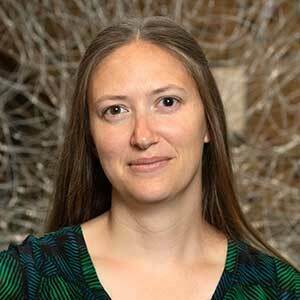
<p>Schaefer will serve as Notre Dame’s lead and the center’s deputy director. The Notre Dame team will also include eight additional members of the College of Engineering, including seven from the <a href="https://cbe.nd.edu">Department of Chemical and Biomolecular Engineering</a>: Assistant Professor <a href="https://engineering.nd.edu/faculty/yamil-j-colon/">Yamil Colón</a>, Associate Professor <a href="https://engineering.nd.edu/faculty/alexander-dowling/">Alexander Dowling</a>, Frank M. Freimann Collegiate Professor of Engineering <a href="https://engineering.nd.edu/faculty/ruilan-guo/">Ruilan Guo</a>, Keough-Hesburgh Professor of Engineering and Associate Vice President for Research <a href="https://engineering.nd.edu/faculty/edward-maginn/">Edward Maginn</a>, Bernard Keating-Crawford Professor <a href="https://engineering.nd.edu/faculty/nosang-myung/">Nosang Myung</a>, Assistant Professor <a href="https://engineering.nd.edu/faculty/casey-obrien/">Casey O’Brien</a> and Rooney Family Collegiate Chair of Engineering <a href="https://engineering.nd.edu/faculty/william-phillip/">William Phillip</a>.</p>
<p>The team also includes <a href="https://engineering.nd.edu/faculty/yanliang-zhang/">Yanliang Zhang</a>, the Advanced Materials and Manufacturing Collegiate Professor in the <a href="https://ame.nd.edu">Department of Aerospace and Mechanical Engineering</a>; <a href="https://architecture.nd.edu/faculty/john-onyango-phd/">John Onyango</a>, an associate professor in the <a href="https://architecture.nd.edu">School of Architecture</a>; and <a href="https://law.nd.edu/directory/bruce-huber/">Bruce Huber</a>, a professor in the <a href="https://law.nd.edu">Law School</a>.</p>
<p>Schaefer explained that Notre Dame will contribute to all three main streams of the center’s research.</p>
<p>The first stream focuses on innovative ways to handle current refrigerants. Notre Dame researchers will develop new, more economical ways to separate HFCs to reuse or recycle them. A second research stream aims to achieve safer refrigerants that maintain or improve performance but do not negatively affect Earth’s atmosphere over time. Notre Dame will do computational prediction work for this stream in collaboration with atmospheric scientists at the University of Hawaiʻi. As part of a third stream, researchers at Notre Dame will pioneer technologies that will increase the energy efficiency of refrigeration systems to reduce the electricity demand on the grid.</p>
<p>Notre Dame researchers will also develop new ways of sensing refrigerant leaks, engineer solid-state systems that eliminate the need for refrigerant fluids and explore new approaches to moving heat while also contributing expertise in environmental law and sustainable architecture to support the successful implementation of new technologies developed by the center.</p>
<p>For Schaefer, EARTH’s approach aligns well with the University’s mission and current priorities.</p>
<p>“Refrigeration might not be the first thing that comes to mind as we think about protecting the environment, but it is a critical energy sustainability challenge, and we are grateful to the National Science Foundation for supporting innovation in this area,” Schaefer said. “At the same time, Notre Dame’s new <a href="https://strategicframework.nd.edu/notre-dame-2033-a-strategic-framework/">strategic framework</a> asks us to ‘draw the connections between the social and environmental dimensions’ of climate change. That is exactly what the holistic, interdisciplinary approach embodied in EARTH is seeking to do.”</p>
<p><em><strong>Contact: Jessica Sieff</strong></em><em>, associate director of media relations, 574-631-3933, </em><a href="mailto:jsieff@nd.edu"><em>jsieff@nd.edu</em></a></p>
<p class="attribution">Originally published by <span class="rel-author">Brett Beasley</span> at <span class="rel-source"><a href="https://news.nd.edu/news/notre-dame-to-develop-next-generation-refrigerant-technology-as-part-of-a-new-national-science-foundation-engineering-research-center/">news.nd.edu</a></span> on <span class="rel-pubdate">August 21, 2024</span>.</p>]]>
    </content>
    <link rel="enclosure" type="image/jpeg" href="https://maginnlab.nd.edu/assets/647672/main_building_stone.jpg" title="The main entrance to Notre Dame campus is pictured with the Golden Dome / Main Building in the background and the words Notre Dame carved into stone in the foreground."/>
    <author>
      <name>Brett Beasley</name>
    </author>
  </entry>
  <entry>
    <id>tag:maginnlab.nd.edu,2005:News/179006</id>
    <published>2023-12-15T14:22:00-05:00</published>
    <updated>2026-02-05T14:23:05-05:00</updated>
    <link rel="alternate" type="text/html" href="https://maginnlab.nd.edu/news-and-events/news/notre-dames-edward-maginn-named-fellow-of-the-national-academy-of-inventors/"/>
    <title>Notre Dame’s Edward Maginn Named Fellow of the National Academy of Inventors</title>
    <summary type="text">
      <![CDATA[Edward Maginn, Keough-Hesburgh Professor in the Department of Chemical and Biomolecular Engineering and Associate Vice President for Research at the University of Notre Dame, has been named a Fellow of the National Academy of Inventors (NAI) — the highest professional distinction awarded solely to academic inventors.]]>
    </summary>
    <content type="html">
      <![CDATA[<p><strong><a href="https://engineering.nd.edu/faculty/edward-maginn/">Edward Maginn</a>,</strong> Keough-Hesburgh Professor in the Department of Chemical and Biomolecular Engineering and Associate Vice President for Research at the University of Notre Dame, has been named a Fellow of the National Academy of Inventors (NAI) — the highest professional distinction awarded solely to academic inventors.</p>
<p>This year’s class of 162 <a href="https://academyofinventors.org/wp-content/uploads/2023/12/2023-NAI-Fellows-List.pdf"><strong>NAI Fellows</strong></a> from around the world includes two Nobel Laureates, three National Inventors Hall of Fame inductees, and 22 members of the National Academies of Sciences, Engineering, and Medicine.</p>
<p>Maginn is a globally recognized leader in research linking the physical properties of materials to their chemical composition. Much of his work has been directed toward greenhouse gas capture and reduction, electrolytes for energy storage, and materials for more efficient cooling and refrigeration.</p>
<p>His work in algorithmic and computational research led to the development of the open-source Monte Carlo package Cassandra, most commonly used to compute the thermodynamic properties of fluids.</p>
<p>Maginn has been granted ten United States patents, primarily focusing on the use of ionic liquids for refrigeration and for electroplating.</p>
<p>Maginn has published more than 230 peer-reviewed papers with more than 27,000 citations. He has written 10 book chapters and authored 202 contributions to conference proceedings.</p>
<p>Maginn and the other 2023 fellows will be presented with medals at the group’s 13th annual meeting on June 18, 2024, in Raleigh, North Carolina.</p>
<p>Other recent NAI Fellows at Notre Dame include <strong><a href="https://research.nd.edu/news-and-events/news/notre-dames-nosang-myung-elected-an-nai-fellow-the-highest-professional-distinction-awarded-to-academic-inventors/">Nosang Myung</a> </strong>(2022), <a href="https://engineering.nd.edu/news/engineers-bernstein-and-chang-elected-fellows-of-the-national-academy-of-inventors/"><strong>Gary Bernstein and Hsueh-Chia Chang</strong></a> (2020), and <a href="https://wireless.nd.edu/news/hochwald-named-2019-national-academy-of-inventors-fellow/"><strong>Bert Hochwald</strong></a> (2019).</p>]]>
    </content>
    <link rel="enclosure" type="image/jpeg" href="https://maginnlab.nd.edu/assets/647739/edward_maginn_hero.jpeg" title="A man with grey hair and black-framed glasses smiles, wearing a light blue collared shirt and a dark grey plaid blazer."/>
    <author>
      <name>Karla Cruise</name>
    </author>
  </entry>
  <entry>
    <id>tag:maginnlab.nd.edu,2005:News/179005</id>
    <published>2023-12-08T13:16:00-05:00</published>
    <updated>2026-02-05T13:24:51-05:00</updated>
    <link rel="alternate" type="text/html" href="https://maginnlab.nd.edu/news-and-events/news/notre-dame-helps-establish-the-first-us-node-of-top-computational-modeling-network/"/>
    <title>Notre Dame helps establish first US node of top computational modeling network</title>
    <summary type="text">
      <![CDATA[The European Centre for Atomic and Molecular Computation (CECAM) is the longest-running European institute for promoting computational methods. Sometimes called the “third pillar of science,” computational methods involve a new form of discovery that complements…]]>
    </summary>
    <content type="html">
      <![CDATA[<p>The <a href="https://www.cecam.org/">European Centre for Atomic and Molecular Computation</a> (CECAM) is the longest-running European institute for promoting computational methods. Sometimes called the “third pillar of science,” computational methods involve a new form of discovery that complements theory and experimentation. These methods have become central for advanced research in materials science, medicine, biology, and other fields. Headquartered in Lausanne, Switzerland, CECAM initiates research and training at 17 different nodes across Europe and Israel.</p>
<p>This month, the University of Notre Dame announced it will help launch an eighteenth CECAM node, extending CECAM’s network to the United States for the first time.</p>
<p>The node, which will be called CECAM-US-Central node, will be based at and led by the University of Chicago. In addition to the University of Chicago and Notre Dame, several leading Midwestern research universities will be founding partners, including Northwestern University, the University of Illinois at Urbana-Champaign, and the University of Wisconsin-Madison. The Argonne National Laboratory will also serve as a founding partner.</p>
<figure class="image image-left"><img src="https://research.nd.edu/assets/484092/maginn_square2.jpg" alt="Maginn Square2" width="400">
<figcaption>Edward Maginn, Keough-Hesburgh Professor and associate vice president for research</figcaption>
</figure>
<p><a href="https://engineering.nd.edu/faculty/edward-maginn/">Edward Maginn</a>, the Keough-Hesburgh Professor and associate vice president for research at Notre Dame, said, “The University of Notre Dame is excited to partner in the establishment of CECAM-US-Central. Notre Dame has long been a leader in the field of molecular modeling and simulation, and the establishment of this CECAM node will allow us to further strengthen our research in this rapidly changing field. Along with our partner institutions, we look forward to developing this node into an intellectual hub for the advancement and application of new simulation and modeling methods to solve some of the most challenging problems facing society.”</p>
<p>CECAM Director Andrea Cavalli said, “The CECAM-US-Central remarkably impacts the global positioning of CECAM by creating its first node outside of Europe. This node brings together a strong and exciting consortium of partners. It provides CECAM with a unique opportunity to strengthen further knowledge exchange between European and U.S. researchers in computational science. These scientific and technological activities are crucial to fostering exciting collaborations in leading-edge theories, software, and applications to address grand challenges for societal progress.”</p>
<p>The node and its members will host workshops, seminars, and conferences and provide opportunities to jointly develop training programs and networks. Faculty and students will also have the opportunity to visit and/or work alongside peers at other CECAM nodes.</p>
<p>The new node will officially launch in January 2024, and its first activity will be an academic conference to be held at the University of Chicago in July 2024.</p>
<p>Contact:</p>
<p>Brett Beasley / Writer and Editorial Program Manager<br>Notre Dame Research / University of Notre Dame<br>bbeasle1@nd.edu </p>
<p>About Notre Dame Research:</p>
<p>The University of Notre Dame is a private research and teaching university inspired by its Catholic mission. Located in South Bend, Indiana, its researchers are advancing human understanding through research, scholarship, education, and creative endeavor in order to be a repository for knowledge and a powerful means for doing good in the world. </p>
<p class="attribution">Originally published by <span class="rel-author">Brett Beasley</span> at <span class="rel-source"><a href="https://research.nd.edu/news-and-events/news/notre-dame-helps-establish-the-first-us-node-of-top-computational-modeling-network/">research.nd.edu</a></span> on <span class="rel-pubdate">December 08, 2023</span>.</p>]]>
    </content>
    <link rel="enclosure" type="image/png" href="https://maginnlab.nd.edu/assets/647692/cecam_image2.png" title="White &quot;cecam&quot; logo with an abstract geometric icon, over a blurred background of green and gray molecular models and scientific equations. Below the logo is &quot;Centre Européen de Calcul Atomique et Moléculaire&quot;."/>
    <author>
      <name>Brett Beasley</name>
    </author>
  </entry>
  <entry>
    <id>tag:maginnlab.nd.edu,2005:News/178976</id>
    <published>2022-04-27T15:47:00-04:00</published>
    <updated>2026-02-04T21:21:22-05:00</updated>
    <link rel="alternate" type="text/html" href="https://maginnlab.nd.edu/news-and-events/news/edward-maginn-appointed-associate-vice-president-for-research-at-the-university-of-notre-dame/"/>
    <title>Edward Maginn appointed associate vice president for research at the University of Notre Dame</title>
    <summary type="text">
      <![CDATA[Edward Maginn, Keough-Hesburgh Professor of Engineering in the Department of Chemical and Biomolecular Engineering at the University of Notre Dame, has been appointed associate vice president for research, effective July 1, 2022. In this role, Maginn will be responsible for a number of special projects related to new initiatives at Notre Dame and certain projects that are already underway that will strengthen the support systems within Notre Dame Research.]]>
    </summary>
    <content type="html">
      <![CDATA[<p><a href="https://engineering.nd.edu/faculty/edward-maginn/">Edward Maginn</a>, Keough-Hesburgh Professor of Engineering in the Department of Chemical and Biomolecular Engineering at the University of Notre Dame, has been appointed associate vice president for research, effective July 1, 2022.</p>
<p>In this role, Maginn will be responsible for a number of special projects related to new initiatives at Notre Dame and certain projects that are already underway that will strengthen the support systems within <a href="https://research.nd.edu/">Notre Dame Research</a>.</p>
<p>“I am honored to be asked to serve as an associate vice president for research,” said Maginn. “Notre Dame’s research enterprise is strong and growing stronger every year. This is the direct result of the hard work, creativity, and innovation of our faculty, staff, and students. Notre Dame Research plays a key role in helping our researchers reach their full potential as scholars who make a difference in the world. I am excited to be a part of the Notre Dame Research team to help advance the University’s mission of excellence in research.”</p>
<p>Maginn has been on the Notre Dame faculty since 1995 and, until last year, served as chair of his department. In addition, he has served as associate dean for academic programs in the Graduate School. He is the winner of the James A. Burns C.S.C. Graduate School Award and the John A.  Kaneb Award for Outstanding Teaching. </p>
<p>Maginn’s research focuses on developing and utilizing advanced molecular-level simulation methods to discover the link between the chemical structure and composition of materials and their thermophysical properties. Much of his lab’s efforts are devoted to energy and environmental applications.</p>
<p>“I am grateful that Ed has agreed to join Notre Dame Research at this time,” said <a href="https://research.nd.edu/staff/robert-j-bernhard/">Robert J. Bernhard</a>, vice president for research and professor of aerospace and mechanical engineering. “While his own research and teaching are flourishing, Ed has agreed to help support the research programs across campus at this very important time. For that, we are very grateful.”</p>
<p>To learn more about Edward Maginn, please visit <a href="https://engineering.nd.edu/faculty/edward-maginn/">https://engineering.nd.edu/faculty/edward-maginn/</a>.</p>
<p>About Notre Dame Research:</p>
<p>The University of Notre Dame is a private research and teaching university inspired by its Catholic mission. Located in <a href="https://southbendin.gov/">South Bend, Indiana</a>, its researchers are advancing human understanding through research, scholarship, education, and creative endeavor in order to be a repository for knowledge and a powerful means for doing good in the world. </p>
<p class="attribution">Originally published by <span class="rel-author">Joanne Fahey</span> at <span class="rel-source"><a href="https://research.nd.edu/news-and-events/news/edward-maginn-appointed-associate-vice-president-for-research-at-the-university-of-notre-dame/">research.nd.edu</a></span> on <span class="rel-pubdate">April 27, 2022</span>.</p>]]>
    </content>
    <link rel="enclosure" type="image/jpeg" href="https://maginnlab.nd.edu/assets/647584/mlc_2425_dome_03.jpg" title="The golden statue of Our Lady stands atop the shimmering Golden Dome of the Main Building at the University of Notre Dame. Her right arm is extended. A small black cross is visible on the lower part of the dome, against a bright blue sky with white clouds."/>
    <author>
      <name>Joanne Fahey</name>
    </author>
  </entry>
</feed>